Separation Techniques: Grade 9 Chemistry
We are going to lightly take a look at the ways we can separate a mixture, as taught in grade 9 NCERT / CBSE. We will look at:
- Coagulation
- Distillation
- Centrifugation
- Chromatography
Have fun reading!
Coagulation
Coagulation is a method used to separate two components of a mixture by forming ‘clumps’.
A coagulant is used to clog or clump one component, while the other says the same, allowing us to separate the two.
An example is adding फिटकरी (Fitkari/Alum) to a mixture of water and mud. In this case, the mud gets clumped and is slowly settled.
Distillation
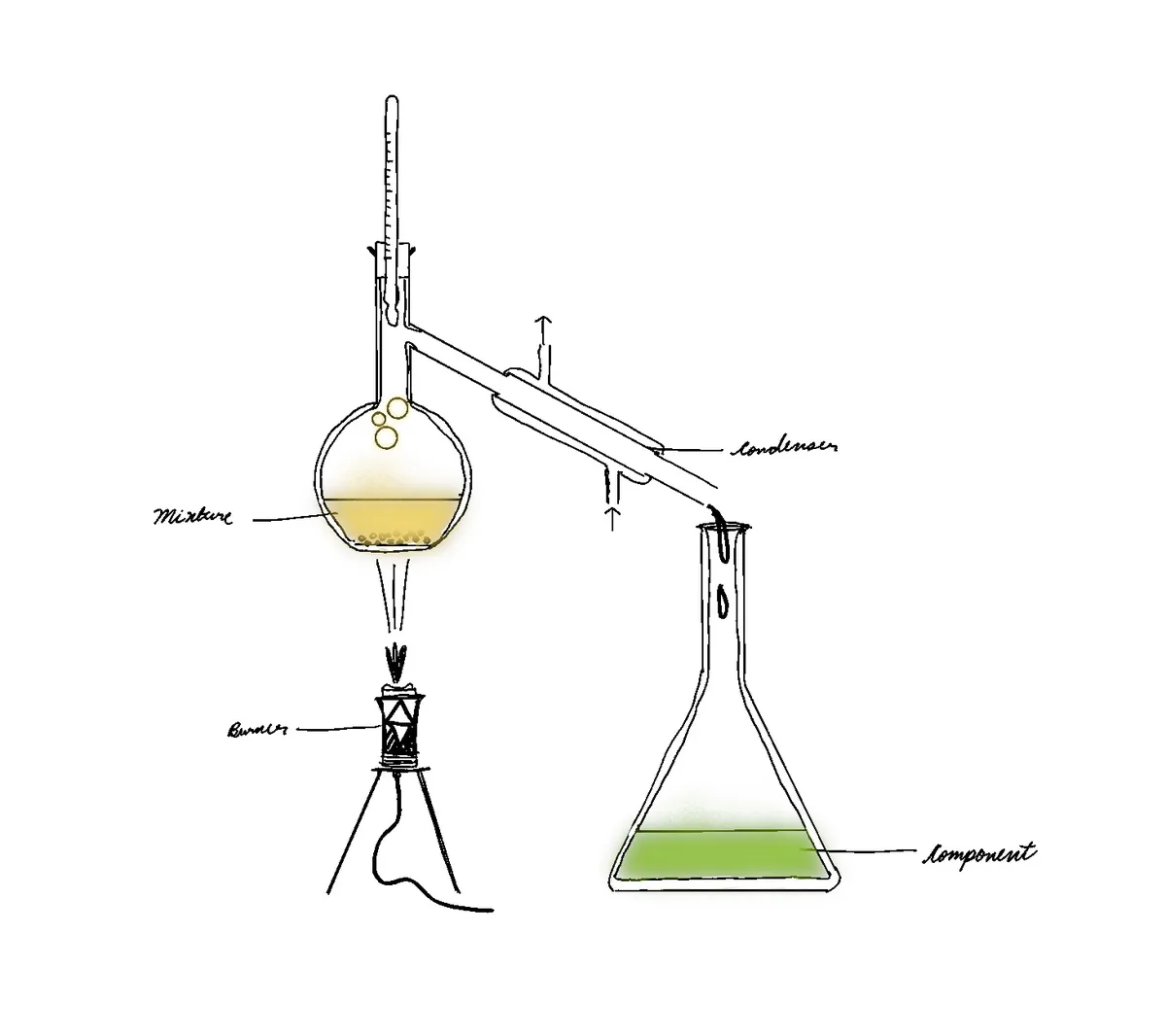
Distillation is a separation method that uses the difference in the boiling temperature of the components to separate the mixture.
Distillation is possible only when the boiling temperature of two components are different. This is mostly done with mixtures of miscible liquids. It is also used to purify liquids.
An example is separating the mixture of water and salt.
Centrifugation
Centrifugation is a separation method by which a mixture is pulled apart using centrifugal force.
It happens when mixtures are spun apart at high speeds, with the components pulling apart due to the centrifugal force.
An example is separating the particles of blood, such as red blood cells and plasma.
Chromatography
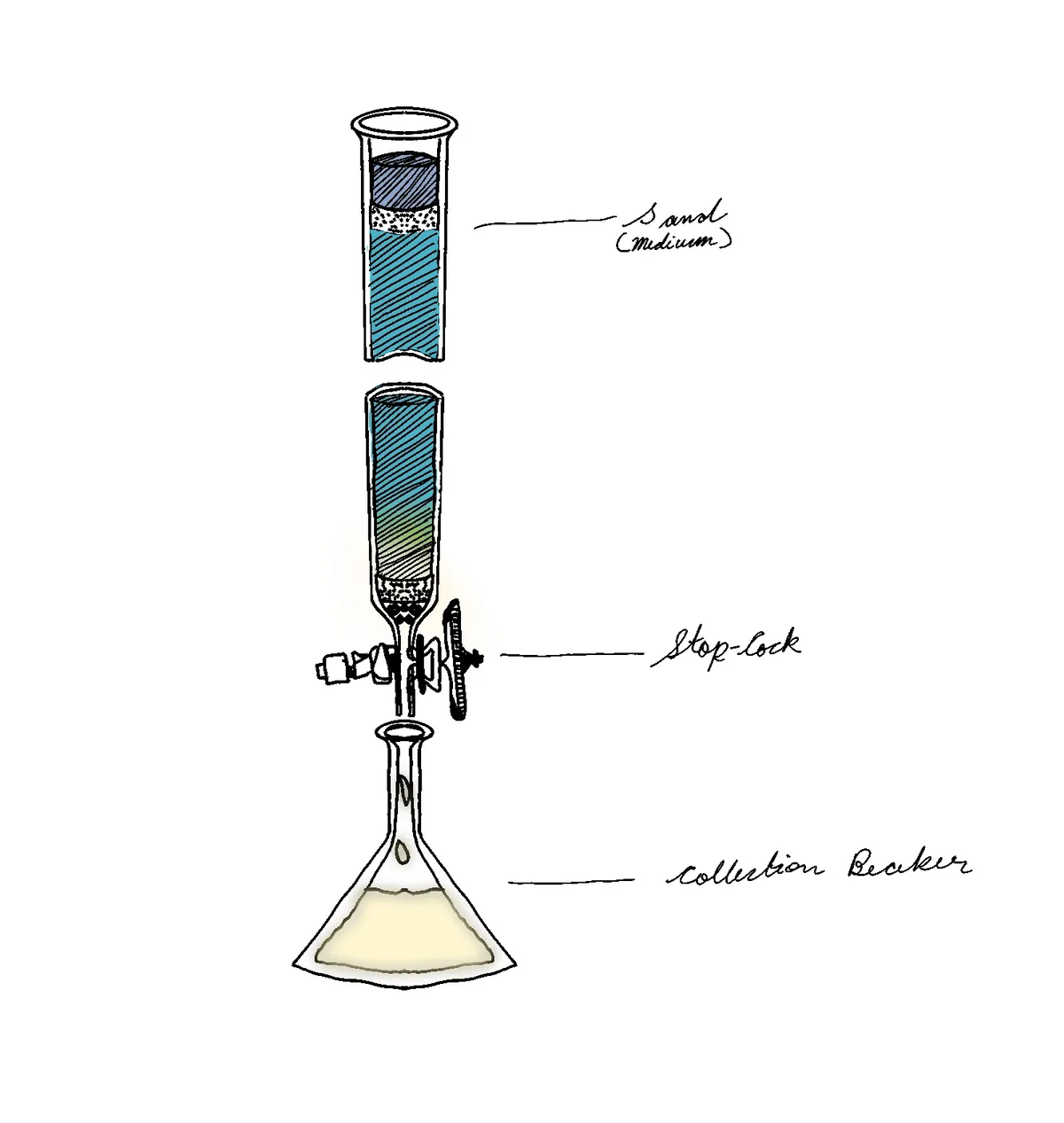
Chromatography is a separation method that pushes the mixture through a medium, causing its components to pass through it at different speeds, eventually separating them.
It usually depends on the difference in absorption rate of the components of the mixture.
An example is Paper Chromatography, which is placing a paper with an inkblot in water. You can watch the different colours in the ink as a spectrum, separating as they ‘race’.